From Weiyuan Temple to the Shuinandong C-Shaped Curve: Using SimLens to Reconstruct a Nightscape Composition
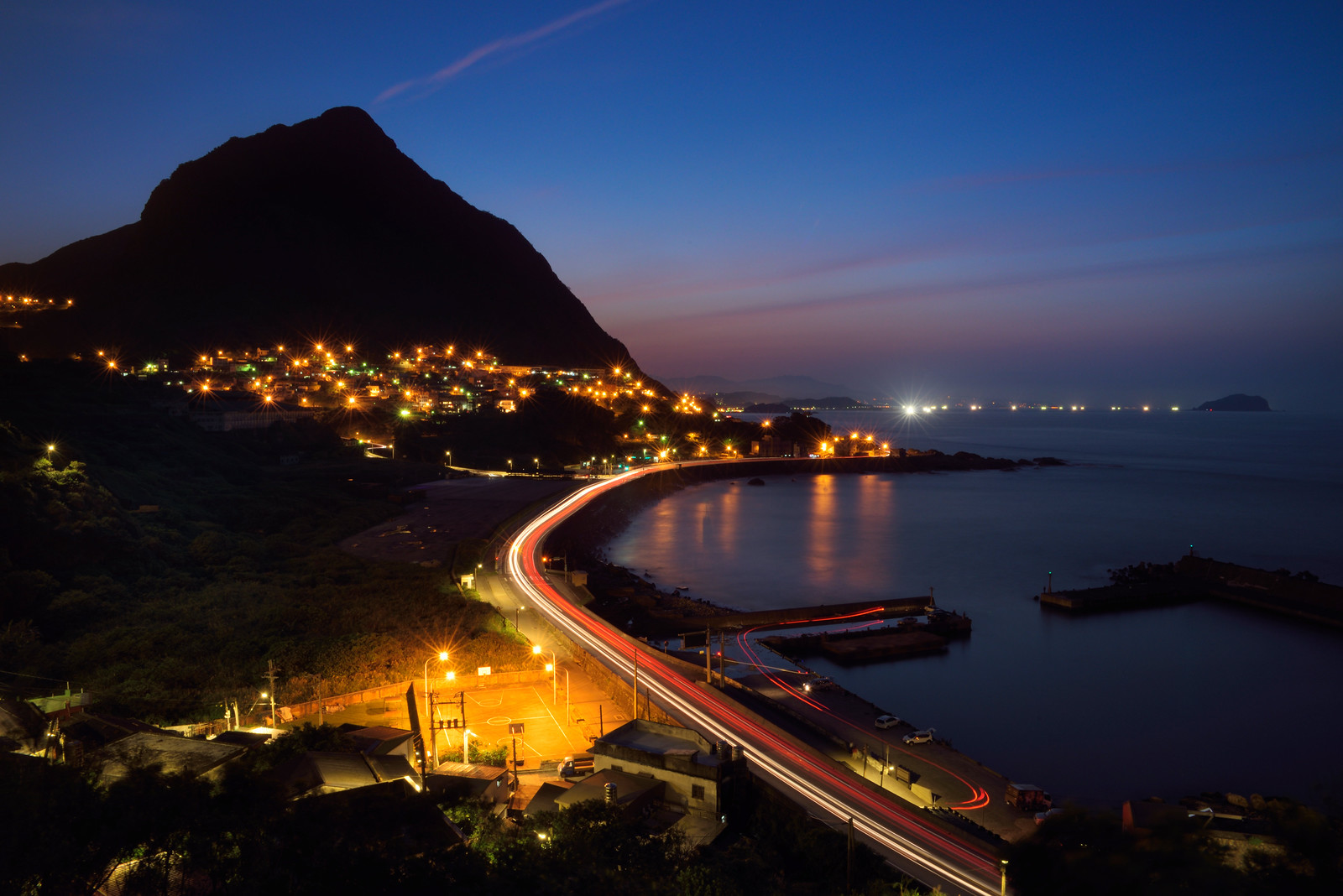
This photo was taken near Weiyuan Temple, looking down toward the C-shaped coastal curve of Shuinandong. On the left side of the frame, the mountain forms a heavy silhouette against the fading blue sky, while the lights of the hillside settlement stretch toward the coastline. In the center, the long-exposure light trails guide the viewer’s eye along the curve of the road, eventually leading toward the harbor and the dark ocean on the right. What makes this composition appealing is not just the car trails themselves, but the way the mountain, sea, village lights, road, and harbor are all held together within a single view.
When shooting this type of landscape, the difficult part is often not simply finding the location, but understanding what focal length is needed from that exact viewpoint. If the lens is too tight, the C-shaped curve and the bay may feel overly compressed or partially cut off. If the lens is too wide, the main subject may become too small, weakening the visual tension of the road curve. This becomes especially important for night photography, where visibility is limited, setup time is often short, and it may not be practical to keep moving around and testing different compositions on location.
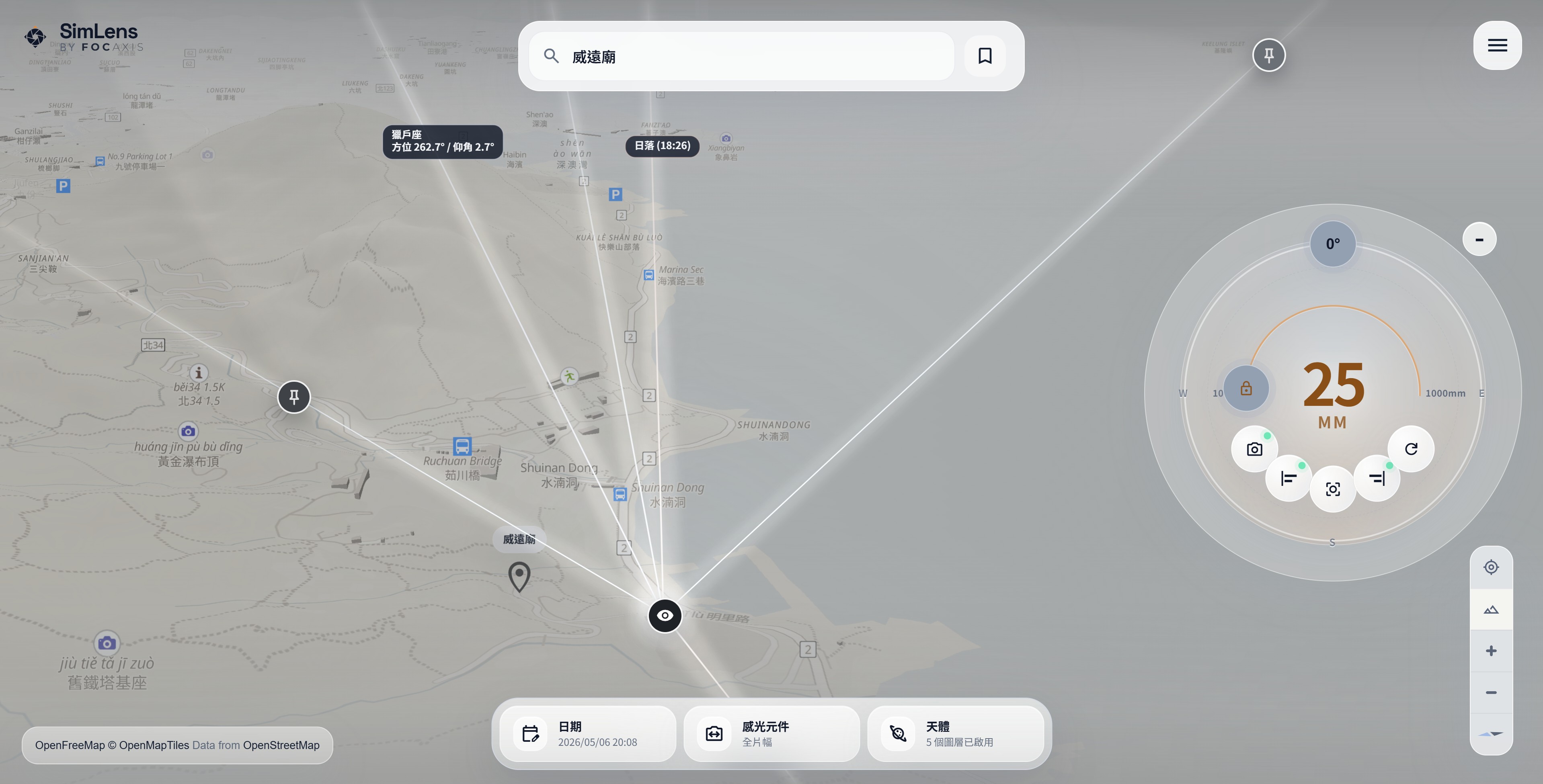
For this example, I used SimLens to place the shooting position and the frame boundaries back onto the map. Based on the simulation result, this Shuinandong nightscape was roughly captured with a field of view close to 25mm. That angle is wide enough to include the mountain on the left, the curved road below, the harbor, and the ocean on the right without losing the overall balance of the scene. This is where SimLens becomes useful: it does not merely show where a photo was taken, but connects the shooting position, viewing direction, frame coverage, and estimated focal length into one planning workflow.
To me, this image is a strong example of how SimLens can support landscape photography. The Shuinandong C-shaped curve already has a beautiful natural line, but the final composition depends on the balance between focal length, viewpoint, and terrain. By checking the approximate focal length in advance, the actual shooting process becomes much more focused: waiting for traffic flow, controlling exposure time, and capturing the short blue-hour moment before the sky turns completely dark. This is one of the reasons I built SimLens — to help photographers preview composition possibilities before they even arrive on location.