Case Study: A Shot of Comet C/2023 A3 (Tsuchinshan-ATLAS)
Next, I want to share a practical application that combines astronomy with landscape photography: a comet landscape shot I took on October 12, 2024.

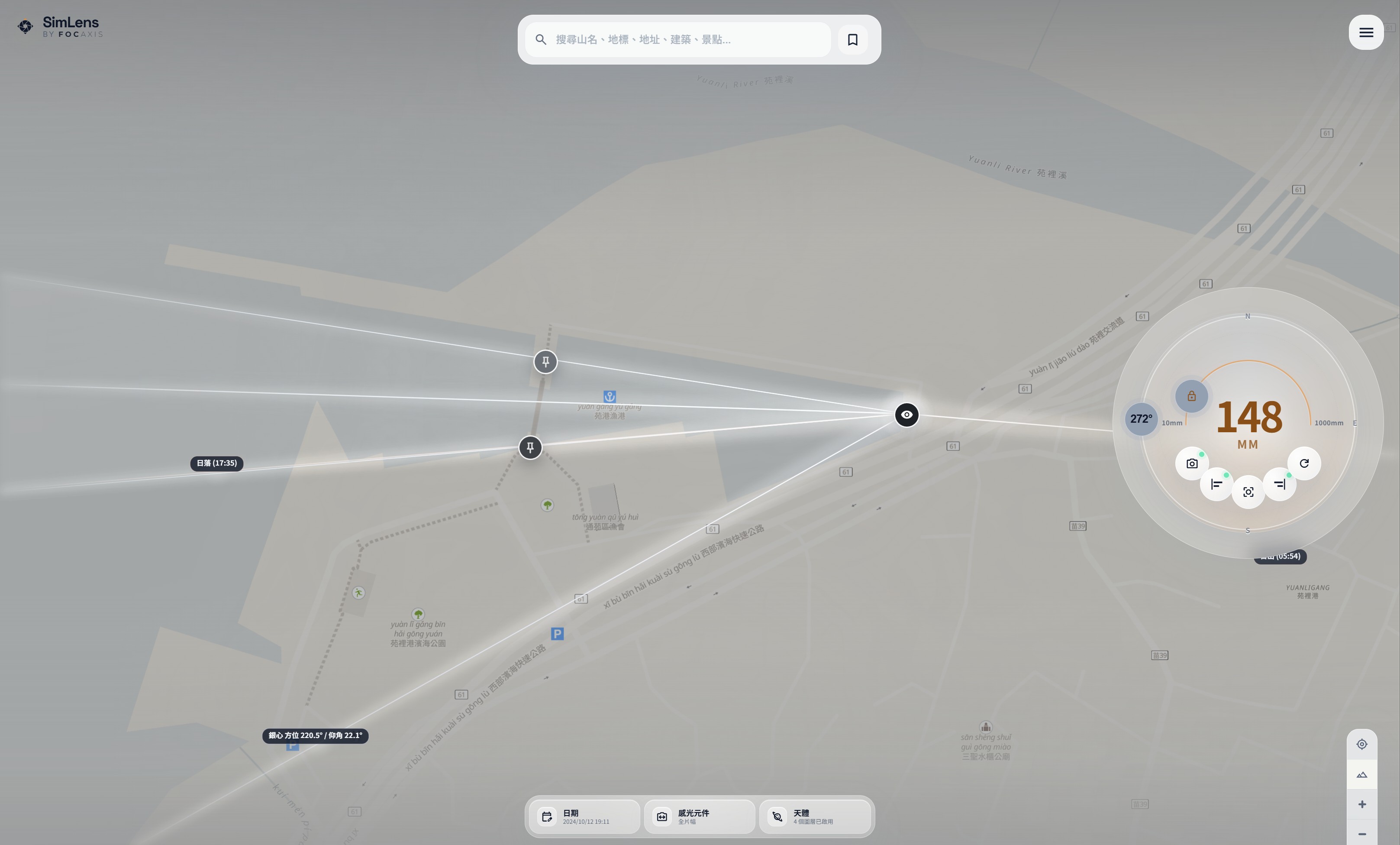
Since a comet is a relatively small target in the vast night sky, perfectly aligning it with ground-level structures (like a bridge) within your frame relies heavily on precise pre-calculation. In a traditional planning workflow, photographers usually have to go through several tedious steps:
1. Use an astronomy app to confirm the comet's azimuth and elevation at a specific time. 2. Evaluate the angle of view occupied by the length of the comet's tail. 3. Reverse-calculate and guess what focal length lens is needed to achieve the ideal composition proportions. 4. Search the map for a shooting location that meets all the above conditions and is free of visual obstructions.
This kind of cross-platform, multi-step calculation is not only time-consuming but also highly prone to errors. And this is exactly where Focaxis truly shines.Now, we can integrate all this data into a single interface. Through Focaxis’s customized measurement and simulation tools, we can directly set observation points and targets on the map, accurately obtain distance data, and seamlessly simulate the field of view for a specific focal length (such as 148mm). This allows us to approach pre-shoot planning in a much more scientific and comprehensive way—minimizing uncertainty so we can focus entirely on welcoming that perfect moment to press the shutter.